


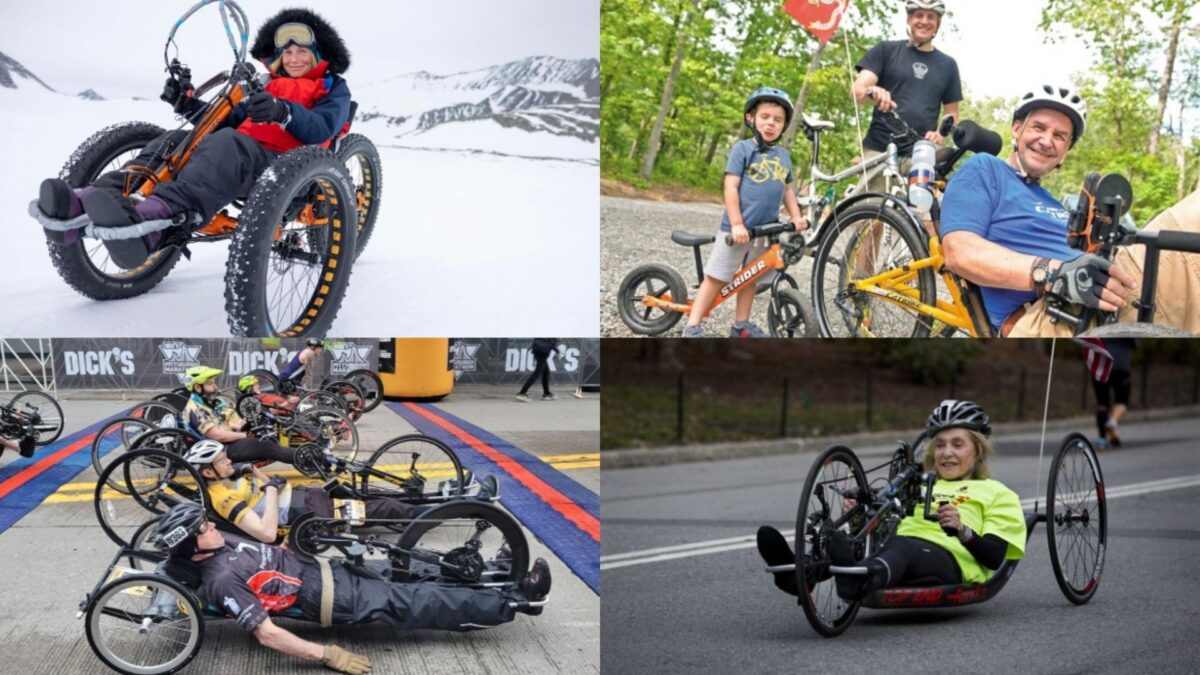
Inspiring Hand-Cycling Journeys: 4 Real Stories of Strength, Freedom, and Human Possibility
December 10, 2025
Hand-cycling is more than an adaptive sport. For thousands of people around the world, it represents freedom, mobility, and the chance to rewrite their story after life-changing injuries or diagnoses. Whether it’s a former athlete rebuilding their identity, a veteran learning to reconnect with the outdoors, or an everyday person seeking independence, the hand-cycle has become a powerful symbol of resilience.
Below are four real, verifiable stories of individuals whose lives were transformed through hand-cycling, journeys that continue to inspire riders and non-riders alike.
1. Karen Darke: From Paralysis to World-Class Hand-Cyclist and Adventurer

At age 21, Karen Darke fell while rock climbing, leaving her paralyzed from the waist down. For someone who spent her life exploring mountains and pushing physical limits, the injury felt like an irreversible end to everything that defined her.
But Karen’s story didn’t stop there.
Searching for a new way to experience movement and adventure, Karen discovered hand-cycling. Her first races were humbling; she finished dead last in her first two events, but she refused to give up. She trained harder, worked with coaches, and gradually transformed into a high-level athlete.
Her determination eventually took her onto the world stage. Karen represented Great Britain in the 2010 World Championships, as well as the London 2012 and Rio 2016 Paralympic Games, winning a gold medal in Rio. She’s hand-cycled through the Himalayas, across Patagonia, and completed extreme endurance expeditions around the globe.
Karen’s message is clear:
Even from rock bottom, you can rebuild a life of adventure, one revolution at a time.
2. Preston Curry: A Veteran Who Found Liberation and Identity Through Adaptive Cycling
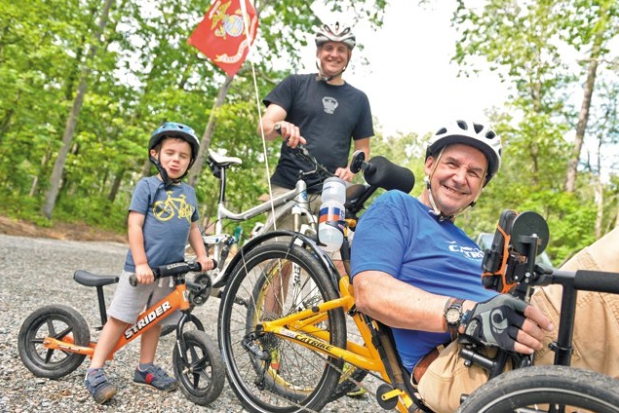
For military veteran Preston Curry, life changed instantly after a spinal-cord injury that left him relying on a wheelchair. Outdoor activities he once loved- hiking trails, nature rides, and long open roads- felt out of reach. The world seemed to shrink.
Then he found hand-cycling.
Preston discovered a model called the Lasher handcycle, built for rugged terrain with footrests, a seatbelt, and a wide gear range. It wasn’t just a bike, it was a way back into nature. Soon, he was riding along gravel trails, pushing through forest paths, and reclaiming the outdoor life he thought he’d lost forever.
In interviews, Preston often describes the feeling as “liberation.” It wasn’t only about exercise; it was about reconnecting with purpose, confidence, and joy. Adaptive cycling helped him redefine what was possible and gave him a community of riders who understood both his challenges and his strengths.
His journey highlights something larger than sport:
When mobility is taken away, finding freedom again becomes life-changing. Hand-cycling gave Preston his freedom back.
3. Shawn Seguin: A Marine Who Turned Trauma Into Triumph Through Hand-Cycling
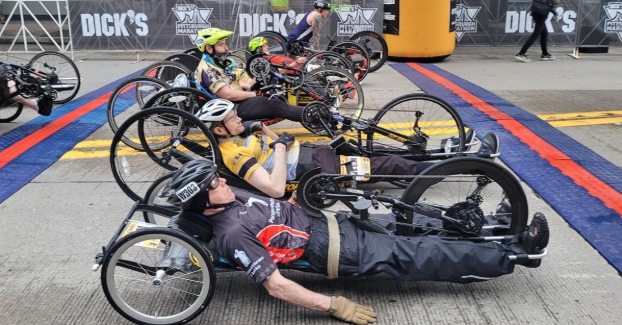
Some stories start in darkness before finding the light, and Shawn Seguin’s is one of the most powerful examples of this transformation.
A Marine veteran injured while serving overseas, Shawn spiraled into depression, culminating in a suicide attempt. His world felt small and hopeless. But during rehabilitation, he was introduced to adaptive hand-cycling, and it became a turning point that reshaped his entire life.
Through consistent training with the Freddie Fu Cycling Team and H-CAT (Handcycle & Cycling Athletes of Tomorrow), Shawn regained physical strength and discovered a renewed purpose. He began competing in marathons, found new friendships, rebuilt his self-esteem, and slowly pieced his life back together.
Today, Shawn has a career, a family, and a deep sense of pride in being an athlete again. His journey shows how adaptive sports often heal more than the body; they heal the heart, mind, and identity.
His story is a reminder that sometimes the right sport arrives at exactly the right time to save a life.
4. Helene Hines: The MS Warrior Who Redefined Her Limits and Became a Champion

When diagnosed with multiple sclerosis at age 30, Helene Hines was told she should prepare for worsening mobility and increasing limitations. Many people would have accepted that path. Helene didn’t.
Determined to stay active, she found hand-cycling, and it unlocked a new chapter of athletic possibility. Throughout the 1990s and 2000s, Helene competed in marathons around the world, eventually becoming one of the most successful female hand-cyclists in her category.
She won the New York City Marathon’s women’s handcycle division in 2000, 2001, 2002, and again in 2010. Over the years, she earned more than 20 marathon victories, inspiring runners, marathon organizers, and adaptive athletes across the globe.
Beyond competition, Helene became a physical-education instructor and advocate for people with disabilities. She was later inducted into the National Jewish Sports Hall of Fame. Her life’s work demonstrates that a diagnosis is not a definition, and limitations don’t have to dictate your story.
Why Hand-Cycling Matters: The Bigger Story Behind These Journeys
While each of these individuals has a unique background, their stories share powerful common threads:
1. Reclaiming Independence
For people who experience paralysis, injury, or chronic illness, hand-cycling restores something precious: movement. Not just physical movement, but the emotional experience of choice, freedom, and control.
2. Healing Through Community
Hand-cycling groups, teams, and clubs provide support systems that uplift riders. Many hand-cyclists say the community is just as life-changing as the sport itself.
3. Strength Beyond Disability
These stories challenge the idea that disability means limitation. They show that athleticism, adventure, and competition exist in many forms, and adaptive sports deserve recognition equal to traditional ones.
4. Mentally Transformative Power
Hand-cycling gives people an outlet to channel frustration, overcome trauma, and build confidence. For riders like Shawn Seguin, it wasn’t just about fitness; it was about survival.
- A Pathway to Adventure
Whether it’s crossing deserts, climbing hills, or exploring trails, hand-cycling invites people back into the world. It brings back the thrill of discovery and outdoor exploration.
The Heart of Hand-Cycling: A Celebration of Human Resilience
These stories prove that strength has nothing to do with walking or running, and everything to do with refusing to be defined by difficulty. Karen Darke, Preston Curry, Shawn Seguin, and Helene Hines each faced moments where life forced them to start over. But through hand-cycling, they found a new path forward, one filled with empowerment, competition, connection, and joy.
Hand-cycling isn’t just a sport.
It’s a lifeline.
A teacher.
A community.
And for many, a second chance.
Whether you’re considering adaptive cycling yourself, supporting someone with mobility challenges, or simply seeking uplifting stories, these journeys remind us of one truth:
Human resilience is unstoppable. And sometimes, all it takes is a set of wheels and the will to keep moving.


